




Skip to content
  • Image
  • Facebook
  • Twitter
  • Youtube
  • Podcasts
  • Email
  • Subscribe to Ray’s Columns
  • Contact
The Arab Daily News

The Arab Daily News

Original news, features, opinions from Chicago to Jerusalem

  • About
    • About
    • Our Writers
    • Book Store
    • Contact
    • Submit Book Reviews, Press Releases
    • Privacy Corrections Policy
    • Profile on Ray Hanania
    • Submit Press Release
  • Features
    • Food
    • Book Review
    • Humor
    • Movies
    • Travel
  • Arab US Community
    • Arab Stores Targeted
    • Arab Community Network Page
    • Arab Heritage America resources
    • Directory
      • Groups & Organizations
      • Mosques, Churches
      • Restaurants
      • 2008 & 2014 Arab Media Directories
    • National Arab Heritage Month
    • Video: Chicago Arab History
    • Video: Photo Array of Chicago Arabs
    • Overview of Arabs in America
    • Hanania standup comedy
    • Arabs on the Titanic
    • Obituaries
  • Podcasts
    • Ray Hanania on Politics Podcast
    • Arab News Ray Hanania Radio
    • Arab Radio Podcast intro
    • Radio Baladi Detroit
    • TwoGuys on Politics
  • Ray on Tiktok
  • Subscribe Ray’s Columns
  • Archive 2004-2013
  • Toggle search form
  • Mohammed Faheem Graphic
    Supporters rally for region’s only radio show on national politics, and Arab and Muslim issues Activism
  • Arab Center Washington DC analyst Virginie Collombier
    Arab Center Washington DC spotlights analysis of the challenges facing Libya’s government Arab Center Washington DC
  • Human Rights Without Frontiers website graphic
    International Rights Groups Raise Alarm Over Freedom of Religion and Expression in South Korea Activism
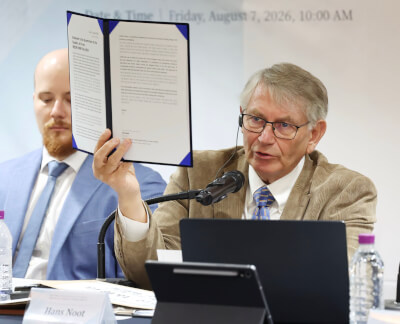
  • HRWF Associate Director Hans Noot was joined by human rights scholars including CAP Liberté de Conscience (CAPLC) President Thierry Valle, FOREF Germany Executive Director Michael Langhans, CESNUR Managing Director and Editor-in-Chief of “Bitter Winter” Massimo Introvigne, and CESNUR Deputy Director Mark Nemes.
    International Human Rights experts call for religious freedom and due process in South Korea Activism
  • Iran flag. Photo courtesy fo Pixabay.com. pixabay.com/fr/photos/iran/
    UN experts alarmed by renewed escalation of hostilities in Iran, call for accountability Human Rights
  • 10-01-25 Arab Center Web Ad 300x300
    Analysis by Arab Center Washington DC: Iran’s Nuclear Leverage Survives the War Arab Center Washington DC
  • Sir Rateb Rabie Newsletter image
    Peace activist and ecumenical Christian leader condemns Israel’s human rights violations American Arabs
  • Turkish festival Ad
    Visit Türkiye Without Leaving Chicago: The Turkish Festival Returns to Tinley Park This August Culture
  • Aber Kawas, Democratic Candidate for Senate District 12 in New York in the November 2026 General Election
    Aber Kawas Wins SD-12 Primary, on Track to Become First Palestinian, First Muslim Woman Elected in New York State American Arabs
  • State Rep. Justin Slaughter, Orland Mayor Jim Dodge, and American Arab Chamber President Hassan Nijem
    American Arab Chamber rallies community for Orland Mayor Jim Dodge American Arabs
  • 06-16-26 American Arab Chamber flyer for Dodge fundraiser
    American Arab Chamber of Commerce of Illinois host fundraiser for Orland Park Mayor Jim Dodge American Arabs
  • Maha bint Mishari bin Abdulaziz Al Saud
    The Board of Trustees Appoints HRH Dr. Maha bint Mishari bin Abdulaziz as the CEO of FII Institute Middle East
  • Team Qatar Enjoy Successful Opening Day at the 24 Hours of Le Mans  Middle East
  • Arab Center of Washington D.C. Executive Director Khalil Jahshan
    Arab Center analyzes prospects for an effective Arab Joint List in Israeli elections Activism
  • NoAzureforApartheid.com
    NO AZURE FOR APARTHEID: Workers Protest Microsoft’s Build Conference for Third Year in a Row Activism
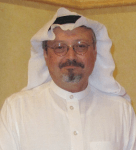
Jamal Khashoggi, former Saudi Royal family insider turned critic at the Washington Post, courtesy of Wikipedia

The Rise and the Fall of the Prince: Fear & Cruelty

Posted on October 19, 2018October 19, 2018 By Abdennour Toumi No Comments on The Rise and the Fall of the Prince: Fear & Cruelty
SHARE ...


  • Tweet


Click here to subscribe FREE to Ray Hanania's Columns

The Rise and the Fall of the Prince: Fear & Cruelty

A ruler needs then to be a fox to recognize traps and a lion to frighten away the wolves. The mysterious and gruesome stories about the disappearance of anti-Saudi Washington Post writer Jamal Khashoggi has left many people wondering and afraid. A former insider in the Saudi government and Royal family who became one of their most frequent critics disappeared and Turkish sources claim he was tortured and killed

By Abdennour Toumi
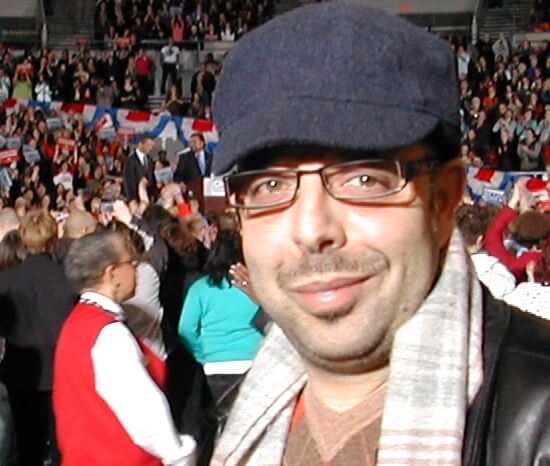
head shot
Abdennour Toumi

The mysterious yet unexplained missing of Saudi journalist Mr. Jamal Khashoggi has left political observers and journalists in the region, indeed world-wide, wondering what happened to him on the Tuesday afternoon, October 2nd, when he entered the Saudi General Consulate in Istanbul to request a banal divorce paper and seemingly never re-emerged.

In the wake of his unexplained disappearance, Turkish media claim to have information revealing the Saudi authorities had him ambushed inside the Consulate shortly after he entered. According to the latest news from Istanbul, the Saudis are preparing a report that will acknowledge his assassination was the result of an interrogation that went fatally wrong. 

What made his perpetrators commit such a cruel act? Did his criticism of the Crown Prince provoke this amount of fear in the palace? Or are the Prince’s governing methods to be feared?

Political violence as a State form of repression and marginalization involves the use of disproportional force to silence dissidents and political opponents whether are journalists, academicians, religious thinkers or Human Rights activists. Nonetheless, these reprehensible characteristics of repression fundamentally violate individual’s  human rights, commonly advocate in the West by NGOs and Human Rights Groups.

The systemic abuse of power, however, which Arab regimes in particular have the habit of employing; it is based on the assumption of “legitimacy” to govern in the eyes of the Prince, so repression or political violence is a tactical means for a strategic end that the regime pursuits in the name of the country’s homeland security and naturally military objectives. Sometimes, for the sake of national security purposes, the Prince rules with Martial laws for decades or Emergency law in Western countries when terrorist attacks occurred.
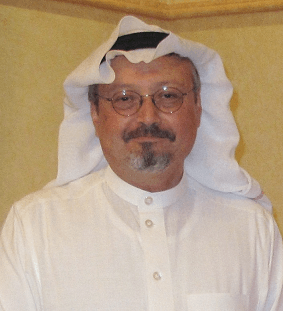
Jamal Khashoggi, former Saudi Royal family insider turned critic at the Washington Post, courtesy of Wikipedia

Clearly all regimes have “threat” ability and can implement it because the concept itself is inherent in the State in these countries, hence a monopoly on the legitimate use of coercion or physical force, including repression. According to Max Weber, [they] have agents of repression, and those agents have assets available to them to act when and where they want. This includes technology, physical force, resources, Intelligence (Mokhabarat/Shabeha) and readiness.

These agents could be military special forces, spies, militia and mercenaries. They get a legitimate function appendix in the regime’s institutions. Why do non-democratic governments use repression and violence?

Though in Modern Arab countries, nation-states built in the 1950s and the 1960s, for instance, collapsed in Somalia, Syria, Iraq, Yemen and Libya. The “rifle or the sword tool” analogy has made the concept of violence not only the tyrannical “rule of the game” in the Prince’s hands, but the basic “rule of the game” for the State itself…

Otherwise, Ibn Khaldoun advises the Prince to avoid tyranny because it caused irreparable consequences leading to the destruction of the State. Which is what is known in MENA region as the “culture of political violence,” whose practice permeates the political sphere at every level in the society, in schools, pop markets, traffic jam, public administration buildings, stadiums and lately even in Mosques along the lines of other underground practices, like the “culture of corruption,” and the “culture of cronyism.”

Such sentiment led to what Machiavelli noted on violence in politics and suggested that “the Prince should make himself feared in such a way that if he is not loved, at least he escapes being hated.” On the other hand, he didn’t suggest the Prince should be “cruel” towards his people and his opponents just because his position of power allows or might allow for it. He preferred that any cruel acts be committed all at once instead as a series of constant predictable events.

This has made the use of such cruelty by the Prince incomprehensible at the present time where political awareness rhymes with polity and civility; whereas, Machiavelli stated also that despite the occasional act of violence against the Prince opposition: “it cannot be called ability to kill his subjects, to betray friends, to be treacherous and pitiless.”

Comparing the views of Machiavelli and Ibn Khaldoun concerning the state-of-mind of the Prince towards his subjects, and considering the on-going dire situation in the Arab and Muslim countries, one could not escape Ibn Khaldoun’s analysis. The geo-historian and the sociologist wrote about States and rulers, but these remarks seem to indicate another round of the Khaldounian paradigm, the foundation for reform and accountability.

So it is significant that the rulers seeking a new social order were not just one more nomadic group mobilized by a religious aim to form a State. In an Arab tribal mind-set the term of al-a’asabia was another Saudis existential determinant with local tribal leaders and religious in al-Hijaz in the creation of the Kingdom; the Saudis based their dynastic authority on this political identity in the region.

Certain modern instruments of repression and control make it easier for Arab regime governments to keep power intact. Hence the late Arabs’ Spring relaunched the a‘asabia factor, the street became greatly divided, and the elite separated to pros and cons because of the political violence that emerged. Consequently from these popular uprisings forced the Prince either to leave or ask for help! It was seen as a curse from

Allah to the masses, and as blessed bread to the Prince to continue ruling with fear and cruelty.

The presence of a nation-state generic, the a‘asabia multi-systemic behavior, among Arab regimes seems to be an important political seed allowing the regime to rule with fear and cruelty regardless of its ideology; in this stance what happened under the Ba’ath party in Iraq and Syria and the Nasserism in Egypt and libya. On the other hand, the Bedouins in Arabia and Nomad tribes in the Sahara desert areas in Algeria and Libya, whom Ibn Khaldoun liked, are now becoming relevant actors in the political process to decrease the degree of a’asabia with the Central State, in a sort of social contract with the Prince.

Nevertheless, this is not just something that Machiavelli considered in the context of relationship of rulers with their subjects, but also in a broader sense as well. For example, he believed that diplomacy, unlike military service, was not virtuous and in foreign policy was not a substitute for arms and money; it did enhance, however, the virtue of even the strongest Prince.

To Machiavelli, a ruler has to “know how to act like a beast, he should imitate both the fox and the lion.” A ruler needs then to be a fox to recognize traps and a lion to frighten away the wolves. But the idea of glory that he discussed becomes the pattern by which a great ruler is measured, not how feared he was by his subjects or enemies.

Unlike Ibn Khaldoun who sees the Prince authority as noble and enjoyable position, so he urged him to reign to the right extent, to avoid excess and not to rule by neither a “rifle nor a saw.”




Click here to subscribe FREE to Ray Hanania's Columns

  • About
  • Latest Posts
Abdennour Toumi
Follow me:
Abdennour Toumi
Abdennour Toumi:
- France correspondent for The Arab Daily News.
- www.bareed-areej.com Editor-in-Chief
رئيس تحرير مجلة بريد الأريج
- Political consultant at IMPR a Think-Tank based in Ankara, Turkey.
- Member at the European Observatory for Arabic Language Teaching based in Paris, France.
- Affiliated with Sociology of Islam Journal and contributor at Middle East Studies / International Studies, Sociology of Islam and Muslim Societies Center, Portland State University in Portland, OR.

EDUCATION: Diplôme des Études Approfondies (DEA) in Political Science from Toulouse University I, France. Master’s degree in Law from Algiers University, Algeria.

Email im at: [email protected]
Abdennour Toumi
Follow me:
Latest posts by Abdennour Toumi (see all)
  • The Israeli-Palestinian Conflict: Is the Neither-Peace-nor-Security As-sumption Dominating Again? - June 7, 2021
  • Algeria: “I Can See Clearly Now” - August 5, 2019
  • Majesty Mohammed VI and General Gaïd Salah Tear Down This Wall! - July 29, 2019
NVP: 277

  • Tweet

SHARE ...


 Tweet 
Abdennour Toumi, Arab World, Bloggers, Commentary, Journalism, Middle East, Opinion, Saudi Arabia, Terrorism Tags:audio tapes, former insider, harsh critic, horrendous atrocity, Istanbul, Jamal Khashoggi, Mohammed Bin Salman, murder, Saudi Arabia, Saudi Embassy, torture, Turkey, Washington Post columnist

Post navigation

Previous Post: Palestinian human rights activist publishes memoir on Arab Spring
Next Post: Screenplay “This American and Israel’s Nuclear Whistle Blower Vanunu” Dedicated to Jamal Khashoggi

Related Posts

  • Plight of Syrians competes for Oscar Arab World
  • Ray Hanania meeting Yasir Arafat when Hanania served as President of the Palestinian American Congress, 1995, in the Gaza Strip.
    Why Palestinians are willing to embrace Netanyahu rather than fight for their rights Bloggers
  • The Islamic Republic of Iran: Forty Years Later Abdennour Toumi
  • Church and Mosque in Jerusalem. Photo courtesy of Ray Hanania
    Over 100 US Congregations Reflect on Plight of Palestinian Christians, Rebuking Administration’s Christian Zionism Arab World
  • Committee to Protect Journalists website. Number of journalists killed in Gaza war now 50
    More than 50 journalists killed in Israel-Gaza war Arab World
  • Tunisian elections: Youngest female candidate poised to make history Ali Younes

More Related Articles

Muharram 2014; a catalyst for change for Muslims. Arab World
Would You Like Chicken Or Beef? Bloggers
Photo from B'Tselem's 50 year exhibit showcasing Palestinians born in 1967. Photo courtesy of B'Tselem Time to rise above anger when confronting Israeli extremism American Arabs
Cement and supplies trickle in to rebuild Gaza Arab World
Magdi A. Mofadal is the ambassador of Sudan to Austria The Imperative for National Reconciliation in Sudan Arab World
Chicagoland’s Arabs learn first lesson in real politics Activism

Leave a Reply Cancel reply

You must be logged in to post a comment.

Arab Center Ad
Arab Center Ad
  • OPINION COLUMNS
  • 02-12-26 Ray Hanania on Marc SIms Podcast
    Ray Hanania joins Marc Sims podcast on censorship, Bad Bunny and racism
    February 12, 2026
  • Arab Center Washington DC
    Arab Center Analysis: Israel’s declining support among American Evangelicals 
    January 1, 2026
  • Akram Baker
    Akram Baker remembered, worked at Orient House in Jerusalem with the late Faisal Husseini
    December 12, 2025
  • 10-01-25 Arab Center Web Ad 300x300
    The CMCC and the US-Israel Alliance: Collusion or Enforcement Mechanism?
    December 5, 2025
  • Source: United Nations Office for the Coordination of Humanitarian Affairs
    Construction in the E1 Area: Preventing Palestinian Geographical Contiguity
    October 27, 2025

Couyrageous Thought: Hanania Syndicated Columns

Ray Hanania courageous Thought website logo
Ray Hanania

Enter Your Email to Subscribe to Ray Hanania’s Columns

Creative Commons License
All work on this website is licensed under a Creative Commons Attribution 4.0 International License. Do not edit original work. Give credit to the original source. Some photos published with permission from Zemanta and Wikipedia.

Pappas Ad

The Lightning Strike Radio Sun 8-10 AM

Mohammed Faheem The Lightning Strike Radio Show
  • NEWS
  • Human Rights Without Frontiers website graphic
    International Rights Groups Raise Alarm Over Freedom of Religion and Expression in South Korea
    August 7, 2026
  • HRWF Associate Director Hans Noot was joined by human rights scholars including CAP Liberté de Conscience (CAPLC) President Thierry Valle, FOREF Germany Executive Director Michael Langhans, CESNUR Managing Director and Editor-in-Chief of “Bitter Winter” Massimo Introvigne, and CESNUR Deputy Director Mark Nemes.
    International Human Rights experts call for religious freedom and due process in South Korea
    August 7, 2026
  • Arab Center Washington DC analyst Virginie Collombier
    Arab Center Washington DC spotlights analysis of the challenges facing Libya’s government
    August 6, 2026
  • Mohammed Faheem Graphic
    Supporters rally for region’s only radio show on national politics, and Arab and Muslim issues
    August 2, 2026
  • Iran flag. Photo courtesy fo Pixabay.com. pixabay.com/fr/photos/iran/
    UN experts alarmed by renewed escalation of hostilities in Iran, call for accountability
    July 24, 2026
  • New-iTunes-1400-x-1400-The-Ray-Hanania-Show-Podcast-Icon-300-x-300.jpg
  • Podcast-iTunes-Logo-Chi-City-Hall-1985.jpg
  • terroristbookcover-300-x-300.jpg
  • The-Kings-Pawn-Book-300-x-300.png
  • powerpr300x300ad.jpg
  • NEWSWIRE
  • Human Rights Without Frontiers website graphic
    International Rights Groups Raise Alarm Over Freedom of Religion and Expression in South Korea
    August 7, 2026
  • HRWF Associate Director Hans Noot was joined by human rights scholars including CAP Liberté de Conscience (CAPLC) President Thierry Valle, FOREF Germany Executive Director Michael Langhans, CESNUR Managing Director and Editor-in-Chief of “Bitter Winter” Massimo Introvigne, and CESNUR Deputy Director Mark Nemes.
    International Human Rights experts call for religious freedom and due process in South Korea
    August 7, 2026
  • Arab Center Washington DC analyst Virginie Collombier
    Arab Center Washington DC spotlights analysis of the challenges facing Libya’s government
    August 6, 2026
  • Mohammed Faheem Graphic
    Supporters rally for region’s only radio show on national politics, and Arab and Muslim issues
    August 2, 2026

Follow Ray Hanania at
Twitter
Facebook
TitkTok
BlueSky
RayHanania Columns
UpScroll
Threads

Click here to get information on The Ray Hanania Radio Show and its podcasts

Copyright © 2026 The Arab Daily News.

Powered by PressBook Premium theme