






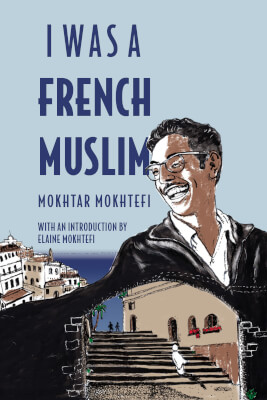
New book: I was a French Muslim by Mokhtar Mokhtefi
Coming later this year
Born in 1935 in a French-colonized Algerian village, Mokhtar Mokhtefi came of age amidst the growing independence movements. He saw the effects of France’s 130-year colonization of his country, and the brutal tactics they used to stay in power: arresting and torturing protesters, rigging elections, and severely limiting the population’s access to education.
At the age of twenty-two, he joined the fight for independence, becoming an officer in the infamous Ministère de l’Armement et des Liaisons Générales (MALG). After training in radio operations at a secret base, he helped establish a wartime communications network, a tremendous feat that France never expected could come from the ill-equipped MALG.
Later in life, he was forced into political exile from the new Algerian government, and published works on North Africa and the Arab world. Written at the end of his life, I WAS A FRENCH MUSLIM (Other Press Hardcover; September 21, 2021; Translated by Elaine Mokhtefi) is both a wise, deeply personal chronicle of the author’s journey from student activist to freedom fighter, and a larger portrait of Algeria’s transition to independent statehood, with all its complexity and pitfalls.
In I Was a French Muslim, Mokhtefi brings the sights and sounds of Algeria to life in vivid detail: his loving, traditionally Muslim upbringing spent watching his father work at their butcher shop, his mother arranging marriages for his five older brothers, schoolyard fights and his favorite couscous.
He remembers being one of the few Algerian children, and the only one in his family, to receive an education past the primary level. During his years at the French-led boarding school, the racist curriculum that promoted colonization only deepened his belief in the need for independence. Despite the risks, he started a secret Front de Libération nationale (FLN) cell among fellow students.
Written in a warm, conversational tone, I WAS A FRENCH MUSLIM also resonates with profound wisdom on politics, human nature, and the harsh realities of war, that can only come from a lifetime of reflection and empathy. Mokhtar Mokhtefi shares the deaths of friends, his own near-misses, and his family’s mix of pride and terror each time his eldest brother was arrested and tortured for promoting Algerian independence.
He also remembers the comradery, the political discussions and the petty grievances, and his growing doubts that Algeria would be able to achieve true democracy among the different nationalist movements. Most importantly, I WAS A FRENCH MUSLIM pays tribute to the many men and women who fought alongside him, often with little more than knives, against an American-backed colonial regime to achieve Algerian independence.
A note on the book’s title: Translator Elaine Mokhtefi, also the author’s widow and the author of Algiers, Third World Capital: Freedom Fighters, Revolutionaries, Black Panthers, explains in her introduction that I WAS A FRENCH MUSLIM is not an idle formulation, but rather the official status of Algerians under the French. While Algeria was considered part of France and the million ‘Europeans’ who lived there were considered French, Algerians’ ID labeled them as ‘French Muslim.” France portrayed itself as a secular state even as it defined its Algerian subjects by their religion.
About the Translator: Elaine Mokhtefi was born in New York City and raised in small towns in New York and Connecticut. She lived for many years in France and Algeria, where she worked as a translator and journalist, and is the author of Algiers, Third World Capital: Freedom Fighters, Revolutionaries, Black Panthers. She is the widow of Mokhtar Mokhtefi.
More Praise for I WAS A FRENCH MUSLIM
“Mokhtefi…reconstruct[s] the sights and sounds of life in his village of Berrouaghia and the constant pressure he felt to be [a ‘French Muslim’]…moving.”
—The Nation
“Mokhtefi’s witty commentary illuminates his buoyancy even in the midst of destruction and heartbreak…..His story is a page-turner….his colorful portrayal of the character of time, place, and people in colonial, wartime Algeria provides captivating reading, as well as context for the relations between France and Algeria then and now….As Mokhtefi’s memoir reveals, the ghosts of the Algerian war live on in both countries.”
—THE MARKAZ REVIEW, Mischa Geracoulis
“This marvelous book takes the reader inside the society of Muslim Algeria in the late colonial period, then inside the evolving anticolonial nationalist movement, and finally inside the National Liberation Army (ALN) and its fledgling signal corps, conveying with savory details the particular flavor of each, while recounting the author’s step-by-step road to freedom in the process of transcending his original condition of a second-class Frenchman denied citizenship in his own country. The narrative of a free spirit if ever there was one, told in an extraordinarily engaging tone of voice faithfully captured by Elaine Mokhtefi’s translation, this is one of the finest memoirs of the Algerian national revolution—fascinating, moving, and a delight to read from start to finish.”
—Hugh Roberts, Edward Keller Professor of North African and Middle Eastern History, Tufts University
“This coming-of-age story follows the transformation of a young boy into a man of conviction and a colonized country into an independent nation. Neither saccharine nor cynical, Mokhtar Mokhtefi’s memoir skillfully depicts the struggle of ‘French Muslims’ during French colonial rule and the Algerian revolution while also foreshadowing the paradoxes and unfulfilled promises of independence. This graceful translation from French provides much-needed access for Anglophone students of history. His memoir will surely take a central place among autobiographies and memoirs of the era for its balanced and compassionate evocation of the tensions of nationalism and—equally important—for its exploration of a young man’s political awakening.”
—Elise Franklin, Assistant Professor, University of Louisville
“I Was a French Muslim is an intensely intimate account by Mokhtar Mokhtefi of his eight years as courier, radio operator, and official of the Algerian independence movement [1954–1962]. He describes crossing the desert on foot, the friendships made, and the arrogant and power-obsessed officers in charge. There are major and minor spats as well as love affairs. This is the story of a generation and its struggle for freedom. But Mokhtefi doesn’t shy away from a bleak assessment of the future. A personal day-to-day, moment-to-moment recounting—lucidly translated from the French by Elaine Mokhtefi—this book is a page-turner.”
—Manfred Kirchheimer, filmmaker
“I Was a French Muslim is an extraordinary document—a lively and moving record of colonial life and anticolonial struggle narrated with generosity, eloquence, and candor. Mokhtar Mokhtefi’s memoir is a rare beast, a powerful and all-too-human tale of revolutionary striving and disappointment, shorn of romance but full of grace.”
—Ben Ehrenreich, author of The Way to the Spring and Desert Notebooks
“This memoir is history written in real-time, intimate and compelling. Yet Mokhtefi never loses sight of the larger historical importance of his personal commitment and the wider dimensions, and potential dangers, of the Algerian struggle for independence. A book to be read by any serious student of the tangled relationship between France and Algeria, past and present.”
—Andrew Hussey, Professor of Cultural History, University of London,
and author of Speaking East: The Strange and Enchanted Life of Isidore Isou
“Sixty years after Algeria won its independence from France, the individuals who formed the backbone of the liberation movement remain, with a few exceptions, anonymous actors. The publication of Mokhtar Mokhtefi’s war chronicles, I Was a French Muslim: Memories of an Algerian Freedom Fighter, brings one such actor—and his entourage—out of the wings and onto the stage of world history. For those unfamiliar with the Algerian War for Independence, this historical fresco in the first person offers a gripping account of life in colonial Algeria and a poignant tale of a generation’s struggle for self-determination. Expert readers—especially those steeped in the lore of Pontecorvo’s The Battle of Algiers—will be struck by Mokhtefi’s version of events, which sidesteps that perhaps most famous episode of the war, preferring instead to expose the daily grind of logistics and politics that was rural warfare. If Mokhtefi’s experiences seem far removed from spectacular urban warfare of an Ali La Pointe, his account of one of the world’s longest-lasting liberation struggles is at once more politically complex, and, ultimately, more personal.”
—Lia Brozgal, Associate Professor, French and Francophone Studies, University of California, Los Angeles
“Mokhtar Mokhtefi’s autobiography holds an original position in the panorama of increasingly abundant memoirs of veterans of the war fought by the Algerian Front de Libération Nationale (FLN) against France between 1954 and 1962. For freedom of tone, irreverence, assumed subjectivity, as well as for the elegance of a swift and precise style, the work avoids any eagerness of edifying narrative or systematic theories; what emerges is, in contrast, almost a social history of Algeria during the colonial era.”
—Andrea Brazzoduro, Marie Sklodowska Curie Global Fellow, Ca’ Foscari University of Venice and University of Oxford
“Mokhtar Mokhtefi and I met and became friends in the last year of his life. We spent hours discussing the manuscript of his memoir; it was his reason for being. He had two essential objectives: one was to remind today’s youth that under colonialism one was never a citizen but a ‘French Muslim,’ a subhuman being, treated as such. His second goal was to display how independent Algeria, as other former colonies, became the continuation of colonization, in the form of dictatorship. The colonialists departed but would be replaced by Algerians who in effect colonized fellow Algerians, and it is not over.”
—Amara Lakhous, author of Clash of Civilizations Over an Elevator in Piazza Vittorio
“When I read Mokhtar Mokhtefi’s memoir, I had the feeling I was discovering my Algerian heritage. It represented the promise of belonging. It made me see how little I had understood colonialism, the war, the people, their resilience, and their humor. It has been a breathtaking adventure. Through him, I have felt the fear of persecution, the incommensurate anger against colonialism, the salty smell of the streets of Algiers, the electrifying atmosphere of independence, the dreams of a boy and soldier who became a free spirit, and the sounds of laughter and rapture. I Was a French Muslim is the gateway to a world so distant today, a world pregnant with promise and fury, of life and joy, of dignity, passion, and utopia.
May his words resonate in our hearts and our lives.”
—Karim Aïnouz, Brazilian film auteur and director
“Mokhtar Mokhtefi recounts in the first person an intimate page of history that marked him for life. He was a soldier of the National Liberation Army at the heart of one of the most heroic anticolonial struggles of the last century. The personalities he frequents will become the idols of the revolution; school children will recite their exploits, and their names will adorn the avenues of independent Algeria. Mokhtefi describes these men and women in their human reality—their grandeur and their courage but also their flights of ego and battles for power that emerge following independence. I Was a French Muslim tells the story of the battle, not only against colonialism, but above all, for liberation. The personal and the political come together to trace the ideal of emancipation that retains its currency and remains to be achieved, in Algeria and elsewhere.”
—Walid Bouchakour,
Algerian journalist, doctoral candidate at Yale University
“In chronicling his personal journey from ‘French Muslim’ to ‘Algerian freedom fighter,’ Mokhtar Mokhtefi leads the reader, with candor and humor, through Algeria’s transition from colonial territory to independent nation. Keenly attuned to the complexities of both colonial society and the nationalist struggle, Mokhtefi’s memoir eschews simplistic narratives in favor of a richly detailed, nuanced portrait of Algerian history, and of the men and women who shaped it during these pivotal decades.”
—Claire Eldridge,
Associate Professor in Modern History, University of Leeds
“The tale of the decolonized is well known. They are born by degrees, they awaken to injustice, they combat it, and then they die, quite soon or perhaps later, they or their convictions. Their tale is the glory of the dead. Except here: this is a tale of life, told in its praise. Before Victory freezes life and life’s palpitations.”
—Kamel Daoud,
author of The Meursault Investigation and Zabor, or The Psalms
“Mokhtar Mokhtefi’s singular memoir of Algeria’s War of Liberation has something for every reader—a vivid portrait of a young man’s rise to political consciousness under the French colonial system, a blow-by-blow account of military training and combat that will be of great interest to historians. A gifted storyteller, Mokhtefi communicates an infectious love of country, yet he firmly dispenses with the pieties of official nationalism by depicting infighting, internal purges, and political ambitions within the nationalist ranks. I Was a French Muslim has been brilliantly translated from the French by the person closest to the author—his widow, Elaine Klein Mokhtefi, in her own right a talented writer and veteran of the Algerian Revolution.”
—Madeleine Dobie,
Professor of French & Comparative Literature, Columbia University
“Mokhtar Mokhtefi’s autobiography holds an original position in the panorama of…memoirs of veterans of the war fought by the Algerian Front de Libération Nationale (FLN) against France between 1954 and 1962…For freedom of tone, irreverence, assumed subjectivity, as well as for the elegance of a swift and precise style, the work is also an anomaly.”
—Journal of North African Studies
“Dashing and charismatic, Mokhtar Mokhtefi dedicated himself to the liberation of his country, French-occupied Algeria, only to become an exile in France, then in the US, because the post-independence government could not tolerate a man of his integrity and democratic principles. Instead of succumbing to bitterness, nostalgia, or vanity, the sanctuary of many political exiles, he remained faithful to the ideals of self-determination and freedom that had led him into the liberation struggle. And at the very end of his life, he wrote this powerful memoir of his revolutionary years, lyrical in its evocation of the Algerian independence movement, yet keenly aware of the tragic dimensions of that history. I Was a French Muslim—fluently translated by his widow, the writer, artist, and activist Elaine Klein Mokhtefi—is more than a chronicle of one man’s life; it is the story of a generation, a bildungsroman of the Algerian freedom struggle.”
—Adam Shatz, contributing editor at the London Review of Books
I WAS A FRENCH MUSLIM
By Mokhtar Mokhtefi
Translated by and with an introduction from Elaine Mokhtefi
Other Press Hardcover | On Sale: September 21, 2021
Price: $26.99 | ISBN: 978-1-63542-180-4


Click here to subscribe FREE to Ray Hanania's Columns

His award winning columns can be found at www.HANANIA.COM Subscribe FREE today
Hanania also writes about Middle East issues for the Arab News, and The Arab Daily News criticizing government policies in the Israeli-Palestinian conflict.
Hanania was named "Best Ethnic American Columnist" by the New America Media in November 2007, and is the 2009 recipient of the SPJ National Sigma Delta Chi Award for column writing.
Email Ray Hanania at [email protected].
Follow RayHanania at Twitter
- Israelisnipers shooting and killing hospital workers in Gaza - December 11, 2023
- CAIR Condemns Israeli Executions of Wounded, Unarmed Palestinian in West Bank - December 11, 2023
- Arab and Muslim American voters face a “simple choice” between Biden’s inhumanity and Trump’s edgy politics - December 9, 2023