





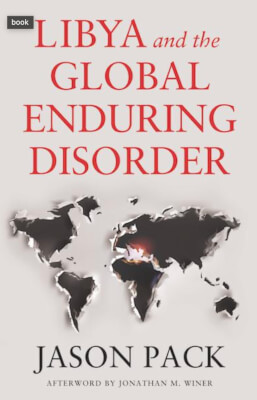
Author releases new book on Libya and its ongoing conflicts
On-the-ground realities in Libya created by a vacuum of leadership and global consensus have had shocking worldwide consequences.
ABOUT THE AUTHOR
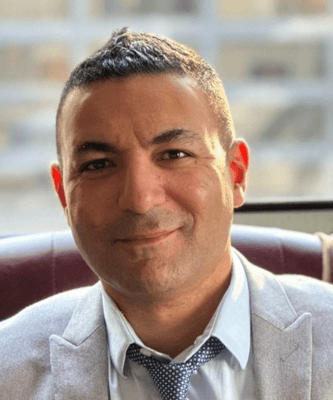
Jason Pack is a non-resident fellow at the Middle East Institute, and the founder of Libya-Analysis LLC. His articles have appeared in The New York Times; The Wall Street Journal; The Spectator; the Financial Times and Foreign Affairs. In 2018 he won the World Championship of Doubles Backgammon.
Q&A
Why Libya? What makes it so ripe for explaining wider geopolitical dynamics?
This book proposes that the international system has exited the post-Cold War period with its well-established features and dynamics and entered a new historical epoch, termed ‘The Enduring Disorder’. This new historical period, which remains under-researched, is characterized by its own structures, trends, and interactions. My main contentions about our historical moment are interrelated: (1) that the international system’s interaction with Libya is an ideal arena to describe the key features of this new historical era (2) that the Enduring Disorder will long outlast the specific sequence of events set in motion by former American President Donald Trump or any given Libyan warlord. My analysis is that their emergence on the world stage was merely symptomatic of the Enduring Disorder, not its root cause. Actually, it is the Enduring Disorder that has given rise to Trump, Brexit, and the unique trajectories of state implosion that have befallen Libya, Yemen, and Syria.
How would you define the Enduring Disorder?
Policymaking has always been comprised of reversals, tug-of-wars, and competition among power centers. But the post-2011 chaos on the international scene appears to differ not only in degree but in kind from what came before. Not only is the international system unmoored due to a lack of American leadership- a development that predated and will long outlast the Trump administration- but also because major powers have failed to create suitable coordination mechanisms to deal with the new kinds of ‘collective action problems’ presented by the 21st century. This is not the multipolarity of previous eras of competition—like the interwar period, where each aspirant to power strove to order and expand its own sphere of influence—but a new era of deliberate disorder. In this era, major international players actively undermine the global order, eschew collaboration, and block knowledge accumulation. Furthermore, these ascending powers may not be concerned with an ordered or balanced international system. We are no longer living in the post-Cold War World. Welcome to the Enduring Disorder.
Who profits from this type of chaos and who suffers from it? Who is actively encouraging its continuation in Libya?
Some commentators perceive Putin as a master manipulator sitting atop an Axis of Evil. Conversely, the Enduring Disorder paradigm sees Russia as incapable of leading an axis of coordinated allies; in fact, Putin is just as poor at coordinating with the leaderships in Belarus and Kazakhstan as the US has become at working with its traditional allies. Despite its global ascendancy, China is beset by similar problems. Most of its neighbors oppose its regional ambitions, other than weak, poor, and dependent North Korea and increasingly isolated Myanmar. Fostering consensus and perfecting seamless coordination are just not the current watchwords of global politics. Trump’s exit from the White House has neither unified Americans domestically nor dramatically restored America’s role as a coordinator of Western and international responses to pressing collective challenges. Similarly, Putin’s eventual ouster or death in Russia seems even less likely to turn Russia into a key bulwark for a consensus-based international system built on transparency and international collaboration. In my view, Trump, Putin, Xi, Erdogan, and their allies have not been the primary driver of events. They are the products of the Enduring Disorder not its cause. Hence, their individual departures from the scene are likely to make little difference unless their replacements seek to reorder the world system. Arguably, then, the defining feature of the Enduring Disorder is the systematic lack of coordination of collective action to achieve mutually beneficial aims. This dysfunction is the antecedent to the rise of neo-populist rulers.
Was there one event in your time working in the Middle East that crystalized the geopolitical moment we are inhabiting today?
From my vantage point watching US policy towards Libya veer this way and that over the years, the events of the spring and summer of 2019 stood out as a high watermark of chaos and contradiction. They were also a microcosm of larger global trends. Witnessing them led me to question my assumptions about the West’s future role in the world and the fundamental principles underpinning the international system. It dawned on me that the contemporary ship of state had become permanently unmoored—careening back and forth due to contradictory decisions undertaken by ill-coordinated power centers. Plato envisioned such a scenario in The Republic. He warned that true democracy would lead to populism. Contempt for experts would ensue, eventually culminating in short-sighted and reversal-prone approaches to policy formation. He also warned that once this point was reached, it would be nearly impossible to put the genie back in the bottle. Over the last few years, my day-to-day experience of the foreign policymaking process in Washington, London, and Tunis, and the resulting outcomes in Libya, seemed to be embodying Plato’s forecasts. In keeping with this observation, this book proposes that the international system has exited the post-Cold War period with its well-established features and dynamics and entered a new historical epoch, termed ‘The Enduring Disorder’.
What role did Trump play in exacerbating the Enduring Disorder phenomenon? And how was it already established before him?
Will the Biden administration inhibit the momentum towards the Enduring Disorder?
What dangers do we face in a world without one superpower in control (hegemony)?
Today’s international institutions do not alleviate the collective action problems that the system of sovereign nation-states and international competition engender. According to this perspective, no amount of reform or strengthening of international institutions will allow them to engage in the functions of mediating collective action problems among their members.
In our current international system, the only thing that does is hegemonic power. This has been the main contention of a large subfield of realist IR scholars like Hans J. Morgenthau, Kenneth Waltz, and others. Another group of historians—we can term them civilizationalists—have analysed five millennia of written human history to demonstrate that peace, prosperity, and coordination among nations are more likely to reign when a single power rules the seas, sets the terms of trade, and imposes, polices, and funds its own version of world order. Given this state of affairs, it should surprise no one that since 2011 new forms of global disorder have arisen as American hegemony has receded.
The Libya context provides every indication that Western policy incoherence will worsen as American hegemony fades and transatlantic cooperation recedes. In fact, the Libyan microcosm reveals quite clearly the weakness of international institutions and the inability of the EU, UN, or NATO to serve as an appropriate venue to mediate differing Western interests.
Those bodies still function effectively as coordinating vehicles when states share interests and are aligned on policy outcomes. But what happens when states have slightly different interests and are unwilling to compromise for the sake of the greater good? These institutions and our current system of international relations are insufficient to bridge the gap between recalcitrant sovereign actors divided on fundamental policy goals.
ADVANCE PRAISE
“Incisive, academic, and witty, Jason Pack pulls no punches in his sharp critique of the so-called ‘international community’. He demonstrates how, together with their Libyan allies, international actors perpetuated and, in some cases profited from, Libya’s descent into chaos. Libya and the Global Enduring Disorder is a timely reminder of how aspects of today’s era of global disorder exacerbate governmental dysfunction, encourage rampant corruption, and provide impunity for human rights abusers. In addition to accurately diagnosing Libya’s problems, Pack provides some good recommendations on the way forward, particularly with regard to measures to improve the performance and transparency of Libya’s economic and financial institutions.” —Stephanie Williams, Former Acting UN Envoy for Libya
“Libya and the Global Enduring Disorder is your authoritative guide through the dense complexity of post-Qadhafi Libya as well as the intricate, self-serving world of Libya policy in Washington. Harnessing his extensive business experience, deep historical knowledge, and personal familiarity with the protagonists inside and outside Libya, Jason Pack tells his story with flair, erudition, and occasional humour. His book is a must-read for anyone in western capitals serious about understanding Libya.” —Julian Borger, World Affairs Editor, The Guardian
“Candid, opinionated, by turns gossipy and scholarly, Jason Pack delivers a lively and provocative assessment of the state of the current global system through the lens of his deeply informed and instructive appraisal of post-Qadhafi Libya. Pack’s acerbic assessment of the international system is not for the faint of heart. His portrayal of the consequences of today’s global disorder on Libya is a powerful illustration of his argument—and a devastating indictment of the ‘international community’.” —Lisa Anderson, Past President American University of Cairo
“Libya and the Global Enduring Disorder employs a novel method in its investigation of recent events in Libya, examining the circumstances that drove the country’s conflicts and crises in order to illustrate the broader breakdown in the international system. Jason Pack explains recent trends in international politics— including the lack of US leadership, divisions in Europe and heightened competition between regional powers. He illustrates that the failure of international collective action towards Libya is an excellent model for demonstrating the importance of reforming the United Nations and multilateral institutions more broadly. The book is essential reading, not only for scholars of the Middle East, but for all those who are interested in understanding today’s changing international system.” —Peter Millett, former British ambassador to Libya (2015-2018)
“With his riveting new book, Libya and the Global Enduring Disorder, Jason Pack has strengthened his reputation as a leading writer on modern Libya. This revelatory work explodes some of the harmful myths about this poorly misunderstood Mediterranean country and its people. His exploration of the Enduring Disorder impact on post-Qadhafi Libya and the true motives of those who are profiteering from the lack of coherent international collective action may make uncomfortable reading for those who worked to liberate Libya in 2011. However, his penetrating analysis—based on meticulous research and personal experience—also provides a practical way forward to reintegrate Libya into the international community. This is a must-read book for anyone interested in understanding how global organizations have become paralysed in the 21st century.” —Rupert Wieloch, Senior British Military Commander in Libya in 2011 and 2012
“Libya and the Global Enduring Disorder draws upon Jason Pack’s deep knowledge of Libya’s history and his personal participation in the country’s contemporary politics to introduce a new paradigm to the broader field of international relations theory. He uses the Libyan microcosm to shed light on the main geopolitical dynamics in action in the contemporary world. The book’s narration is brilliantly enriched by the author’s reflections on his many direct experiences transacting business and undertaking research in key areas of the geopolitical chessboard—thus adding a high degree of originality, nuance, and readability.” —Karim Mezran, Director of the North Africa Initiative and Senior Fellow, The Atlantic Council
“In Libya and the Global Enduring Disorder, Jason Pack makes an essential contribution to the literature on post-revolutionary Libya by diagnosing the underlying economic roots of the country’s ongoing conflict. Pack’s innovative assessments demonstrate how the institutions created in the Qadhafi era have acquired ‘semi-sovereignty’ since 2011, dispelling the myth that modern Libya does not have institutions. He argues instead that it has the wrong ones, and that the current set of institutions are at the heart of Libya’s problems.” —Tim Eaton, Senior Research Fellow, Chatham House


Click here to subscribe FREE to Ray Hanania's Columns

His award winning columns can be found at www.HANANIA.COM Subscribe FREE today
Hanania also writes about Middle East issues for the Arab News, and The Arab Daily News criticizing government policies in the Israeli-Palestinian conflict.
Hanania was named "Best Ethnic American Columnist" by the New America Media in November 2007, and is the 2009 recipient of the SPJ National Sigma Delta Chi Award for column writing.
Email Ray Hanania at [email protected].
Follow RayHanania at Twitter
- Israelisnipers shooting and killing hospital workers in Gaza - December 11, 2023
- CAIR Condemns Israeli Executions of Wounded, Unarmed Palestinian in West Bank - December 11, 2023
- Arab and Muslim American voters face a “simple choice” between Biden’s inhumanity and Trump’s edgy politics - December 9, 2023