





Skip to content
  • Image
  • Facebook
  • Twitter
  • Youtube
  • Podcasts
  • Email
  • Subscribe to Ray’s Columns
  • Contact
The Arab Daily News

The Arab Daily News

Original news, features, opinions from Chicago to Jerusalem

  • About
    • About
    • Our Writers
    • Subscribe to Ray’s Columns
    • Book Store
    • Contact
    • Submit Book Reviews, Press Releases
    • Advertise
    • Privacy Corrections Policy
    • Profile on Ray Hanania
    • Submit Press Release
  • Features
    • Food
    • Book Review
    • Humor
    • Movies
    • Travel
  • Arab US Community
    • Arab Stores Targeted
    • Arab Community Network Page
    • Arab Heritage America resources
    • Directory
      • Groups & Organizations
      • Mosques, Churches
      • Restaurants
      • 2008 & 2014 Arab Media Directories
    • National Arab Heritage Month
    • Video: Chicago Arab History
    • Video: Photo Array of Chicago Arabs
    • Overview of Arabs in America
    • Hanania standup comedy
    • Arabs on the Titanic
    • Obituaries
  • Podcasts
    • Ray Hanania on Politics Podcast
    • Arab News Ray Hanania Radio
    • Arab Radio Podcast intro
    • Radio Baladi Detroit
    • TwoGuys on Politics
  • Ray on Tiktok
  • Subscribe Ray’s Columns
  • Archive 2004-2013
  • Toggle search form
  • Hind Rajab, murdered by Israeli soldiers during the genocide in the Gaza Strip. Photo courtesy Wikipedia
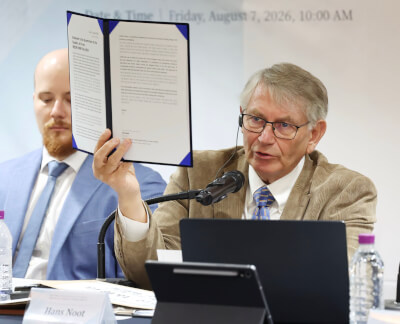
    The Legacies of the Middle East in 2025 Are Likely to Repeat in 2026 Arab Center Washington DC
  • Mohammed Faheem The Lightning Strike Radio Show small
    Challengers in Illinois’ 6th and 10th Congressional Districts Face Voters on The Lightning Strike Activism
  • Zohran Mamdani, New York City Mayoral candidate
    Mayor-Elect Mamdani Appoints Education Veteran Kamar Samuels as Schools Chancellor To Deliver Educational Excellence Civil Rights
  • Taybeh (Taibe) Ralf Lotys (Sicherlich), CC BY 3.0 , via Wikimedia Commons
    Taybeh exposes claims Christians are “treated better in Israel” than in Arab countries Arab World
  • Senator Jeanne Shaheen
    ICYMI: Shaheen Secures Repeal of Caesar Act Sanctions on Syria in Annual Defense Bill Arab World
  • US Secretary of State Marco Rubio violated International rule of law
    Secretary of State Rubio rebuffs Rule of Law and defends war crimes by Israel Human Rights
  • CAIR sues racist Florida Gov. Ron DeSantis
    CAIR LDF, MLFA, SPLC and Akeel & Valentine Sue Florida Governor Ron DeSantis Over ‘Blatantly Unconstitutional’ Executive Order Activism
  • Halil Demir Zakat Foundation Executive Director
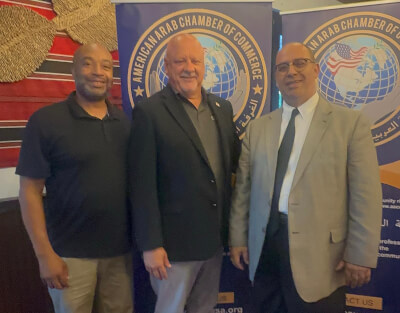
    Arab American Chamber of Commerce Honors Mr. Halil Demir for his Humanitarian Leadership Activism
  • Orland Park Mayor Jim Dodge receives the American Arab Chamber of Commerce Best of the Best Awards 2025 on Dec. 9, 2025
    Illinois Arab Chamber presents “Best of the Best” awards honoring community leaders and activists Activism
  • American Arab Chamber President Hassan Nijem presented Fayez Khosindar with the "Best of the Best" award for 2025 for defendign the rights od Limo and Uber Black Drivers
    Union leader Fayez Khozindar honored for defense of limo and Uber Black drivers O’Hare prayer tent Activism
  • CAIR Urges Congress to Demand Rep. Randy Fine's Resignation After His Call for a Genocide of All 'Mainstream Muslims'
    CAIR Urges Congress to Demand Rep. Randy Fine’s Resignation After His Call for a Genocide of All ‘Mainstream Muslims’ Activism
  • Racist xenophobic Florida Governor Ron DeSantis
    CAIR denounces defamatory namecalling of racist Ron DeSantis American Arabs
  • Kat Abughazaleh 9th DIstrict Congress 2026 candidate democrat
    New Ninth District Poll Shows Abughazaleh Tied for First Place Activism
  • AHRCs Calls for Unity in the Face of Hatred: Dearborn is an All-American City American Arabs
  • Instragram Photo by former employee protestor https://www.instagram.com/reel/DRNrg2gkZHS/
    Microsoft worker disrupts Ignite Conference keynote speech, protests target conference venue in San Francisco, Microsoft headquarters in Redmond, Microsoft European hub in Ireland Civil Rights

Saudi Arabia and Iran: Volatile Political Geography of Oil and Minorities

Posted on August 18, 2015June 12, 2019 By James Dorsey No Comments on Saudi Arabia and Iran: Volatile Political Geography of Oil and Minorities
SHARE ...


  • Tweet

Click here to subscribe FREE to Ray Hanania's Columns

By James M. Dorsey

James M. Dorsey, author, writer, blogger

Discontent is bubbling over among the majority Shiite population in Saudi Arabia’s Eastern Province, home to the kingdom’s major oil fields and petrochemical industry. Disgruntlement is no less in the Iranian province of Khuzestan where up to 90 percent of Iran’s oil reserves are located. Iranian Arabs, who account for approximately half of the four million inhabitants of Khuzestan, chafe at perceived cultural and ethnic abuse and repression.

The fact that dissatisfied minorities populate the oil-rich regions of Iran and Saudi Arabia creates an ironic parallel in which in the rivalry between two of the Middle East’s larger powers often amounts to the pot calling the kettle black. Rather than recognising that protests and mounting incidents of violence are the result of government failure to address legitimate grievances, both Iran and Saudi Arabia have blamed each other for the unrest in their strategic backyards.

It’s often hard to distinguish fact from fiction in the murky world of Middle Eastern politics. There is however little doubt that Saudi Arabia and Iran have an interest in kindling unrest in each other’s backyard. By the same token, discriminatory policies against and repression of minorities in both countries are at the core of discontent that could spiral out of control at any moment. Similarly, both Iran and Saudi Arabia could effectively prevent foreign meddling by adopting policies that ensure that their minorities are fully integrated as equals rather than treated as potential fifth columns.

shiite photo
Photo by justDONQUE.images

Integrative policies would also weaken the ability of jihadist groups like Islamic State from exploiting the sectarian divide. That is particularly true in predominantly Sunni Saudi Arabia where the group that controls a swathe of Syria and Iraq has thrice bombed Shiite mosques in the last eight months. Two attacks in May that killed some 25 people prompted the kingdom’s minority that constitutes 10-15 percent of the kingdom’s population to form a civil defence.

IS has since also targeted Saudi security forces to aggravate tension and demonstrate the kingdom’s vulnerability. The group boasted it was responsible for the bombing of a mosque inside a headquarters of the Saudi special forces.

The Shiite civil defence groups reflect a widespread sentiment among Saudi Shiites that the government has failed to protect its minority population. That sentiment is reinforced by prominent Saudi religious leaders depicting the Saudi air war in Yemen against the Shiite Houthis as a just war and the government’s projection of its military campaign as an assault on an Iranian proxy.

The Saudi Shiite sense of exposure is exacerbated by the fact that a protest movement that started in 2011 at the beginning of the Arab popular revolts, has largely been weakened by a harsh government response that led to the shooting by security forces of some 25 Shiite youths and the sentencing to death of a prominent Shiite cleric, Nimr al-Nimr. Not to mention, the Saudi-backed crushing of a predominantly Shiite popular revolt in 2011 in neighbouring Bahrain.

Multiple checkpoints in predominantly Shiite towns like Qatif, designed to pre-empt the eruption of protests, as opposed to relaxed security at Shiite mosques in mixed Sunni-Shiite cities in the Eastern Province, suggest to many Shiites that the government is more concerned about securing the survival of the Saudi regime than ensuring the security of its Shiite minority.

The government’s failure to act against hate speech, as well as the framing of its struggle with Iran for regional dominance  in often anti-Shiite terms, further calls into question what stake Shiite Saudis have in a kingdom dominated by Wahhabism, a puritan, anti-Shiite interpretation of Islam. Wahhabism has meant that Shiite Saudis are barred from serving in the military and security forces or working in the interior ministry while school books describe Shiites as rejecting core principles of Islam. Moreover, a Shiite has yet to be elevated to a Cabinet position and has only once in the kingdom’s diplomatic history been appointed as an ambassador.

In contrast to Saudi Arabia, Iran has been careful not to couch its regional battles or approach to minorities in sectarian terms. But rhetoric aside, Sunni Muslim grievances in Khuzestan constitute a mirror image of those of Shiites in the Eastern Province. Iranian Arabs have long complained that the government has failed to reinvest oil profits to raise the region’s standards of living. The World Health Organization (WHO) identified Ahwaz in 2013 as Iran’s most polluted city.

The shadowy Movement for the Liberation of Al Ahwaz has claimed responsibility for a series of attacks on Iranian security forces and other government symbols in recent months. Soccer brawls have quickly morphed into anti-regime protests. Emulating the 2011 self-immolation of Tarek al-Tayeb Mohamed Bouazizi, the Tunisian fruit and vegetable seller who sparked the Arab revolts, an Iranian Arab vendor, Younes al-Asakirah, set himself on fire earlier this year to protest the allegedly unlawful confiscation of his wares. The incident sparked a wave of protest that were squashed by security forces.

Given their political geographies, Iran and Saudi Arabia resemble two opponents sitting in glass houses throwing stones at one another. Disgruntled minorities and intermittent violence in their resource-rich provinces highlight their vulnerability. Their pursuit of discriminatory and repressive policies that are at the root of the Middle East’s multiple conflicts, and have turned inevitable political transition into a bloody, destructive process, undermine their claims of legitimacy in the struggle for regional dominance.

James M. Dorsey is a senior fellow at the S. Rajaratnam School of International Studies as Nanyang Technological University in Singapore, co-director of the Institute of Fan Culture of the University of Würzburg and the author of the blog, The Turbulent World of Middle East Soccer, and a forthcoming book with the same title.


Photo by justDONQUE.images

Click to get Info
  • About
  • Latest Posts
James Dorsey
Follow Me
James Dorsey
James M. Dorsey is a senior fellow at the S. Rajaratnam School of International Studies as Nanyang Technological University in Singapore, co-director of the Institute of Fan Culture of the University of Würzburg and the author of the blog, The Turbulent World of Middle East Soccer, and a forthcoming book with the same title.
James Dorsey
Follow Me
Latest posts by James Dorsey (see all)
  • Soccer highlights domestic drivers in Saudi-Iranian dispute - January 4, 2016
  • Soccer: Iranian moderates and hardliner lock horns on the pitch - December 29, 2015
  • Trade unions test Qatari sincerity with demands for labour reform - December 20, 2015
NVP: 78

  • Tweet

SHARE ...


 Tweet 
Arab World, Bloggers, Christian & Muslim, Commentary, Gulf States, religion Tags:Iran, Iranian Arabs, Saudi Arabia, Shia Islam, Sunni Islam

Post navigation

Previous Post: Israeli leaders who challenge Israel’s extremists
Next Post: Right wing militias targeting Mosque and Muslim groups

Related Posts

  • Cody O’Rourke a Good Dad from the Holy Land Telling the Truth: Florida and Michigan May-June 2018 Arab World
  • Palestinian Muslims begin the commemoration of Ramadan. Photo courtesy of Ahmad Hasaballah.
    Photos: Muslims celebrate Ramadan in Gaza Strip Ahmad Hasaballah
  • CAIR Presidential Poll Nov. 1, 2024
    CAIR’s Final Election Poll Shows Stein and Harris Still Tied Among Muslim Voters, Trump Trailing American Arabs
  • Qatar’s quagmire: existential fears and missed opportunities Arab World
  • Blue Collar White Americans Spoke and Hired Donald Trump Abdennour Toumi
  • 68 Years of the Palestinian Ongoing Nakba ! Arab World

More Related Articles

A home denied: the Zionist ethnic cleansing of Palestine Arab World
Olmos argues “race” is not a label for divisions at diversity conference American Arabs
Algeria courtesy of Abdennour Toumi Algeria: Something Is Not Right Happened in Raïs Abdennour Toumi
9/11 Sept. 11, 2001 logo memorial from the AHRC 9/11 Attacks, Twenty Years After: Where is the Wisdom? American Arabs
No to Judge Gorsuch and No to Evil Designs of McConnell Commentary
Minnesota Settlement clears way for Muslim prayer center American Arabs

Leave a Reply Cancel reply

You must be logged in to post a comment.

Ray Hanania's 4 times a week columns at https://RayHanania.com at Substack

Enter Your Email to Subscribe to Ray Hanania’s Columns

  • OPINION COLUMNS
  • Arab Center Washington DC
    Arab Center Analysis: Israel’s declining support among American Evangelicals 
    January 1, 2026
  • Akram Baker
    Akram Baker remembered, worked at Orient House in Jerusalem with the late Faisal Husseini
    December 12, 2025
  • 10-01-25 Arab Center Web Ad 300x300
    The CMCC and the US-Israel Alliance: Collusion or Enforcement Mechanism?
    December 5, 2025
  • Source: United Nations Office for the Coordination of Humanitarian Affairs
    Construction in the E1 Area: Preventing Palestinian Geographical Contiguity
    October 27, 2025
  • Netflix Mo Series courtesy of Wikipedia
    Mo Amer’s “Mo” on Netflix is more than just a great comedy series
    September 6, 2025

Creative Commons License
All work on this website is licensed under a Creative Commons Attribution 4.0 International License. Do not edit original work. Give credit to the original source.

The Lightning Strike Radio Sun 8-10 AM

Mohammed Faheem The Lightning Strike Radio Show
  • NEWS
  • Hind Rajab, murdered by Israeli soldiers during the genocide in the Gaza Strip. Photo courtesy Wikipedia
    The Legacies of the Middle East in 2025 Are Likely to Repeat in 2026
    January 8, 2026
  • Mohammed Faheem The Lightning Strike Radio Show small
    Challengers in Illinois’ 6th and 10th Congressional Districts Face Voters on The Lightning Strike
    January 6, 2026
  • Zohran Mamdani, New York City Mayoral candidate
    Mayor-Elect Mamdani Appoints Education Veteran Kamar Samuels as Schools Chancellor To Deliver Educational Excellence
    December 31, 2025
  • Taybeh (Taibe) Ralf Lotys (Sicherlich), CC BY 3.0 , via Wikimedia Commons
    Taybeh exposes claims Christians are “treated better in Israel” than in Arab countries
    December 31, 2025
  • Senator Jeanne Shaheen
    ICYMI: Shaheen Secures Repeal of Caesar Act Sanctions on Syria in Annual Defense Bill
    December 19, 2025
  • New-iTunes-1400-x-1400-The-Ray-Hanania-Show-Podcast-Icon-300-x-300.jpg
  • powerpr300x300ad.jpg
  • The-Kings-Pawn-Book-300-x-300.png
  • terroristbookcover-300-x-300.jpg
  • Podcast-iTunes-Logo-Chi-City-Hall-1985.jpg
  • NEWSWIRE
  • Hind Rajab, murdered by Israeli soldiers during the genocide in the Gaza Strip. Photo courtesy Wikipedia
    The Legacies of the Middle East in 2025 Are Likely to Repeat in 2026
    January 8, 2026
  • Mohammed Faheem The Lightning Strike Radio Show small
    Challengers in Illinois’ 6th and 10th Congressional Districts Face Voters on The Lightning Strike
    January 6, 2026
  • Arab Center Washington DC
    Arab Center Analysis: Israel’s declining support among American Evangelicals 
    January 1, 2026
  • Zohran Mamdani, New York City Mayoral candidate
    Mayor-Elect Mamdani Appoints Education Veteran Kamar Samuels as Schools Chancellor To Deliver Educational Excellence
    December 31, 2025

Follow Ray Hanania at
Twitter
Facebook
TitkTok
BlueSky
RayHanania Columns

Click here to get information on The Ray Hanania Radio Show and its podcasts

Copyright © 2026 The Arab Daily News.

Powered by PressBook Premium theme