








“Our Fates Are Linked”
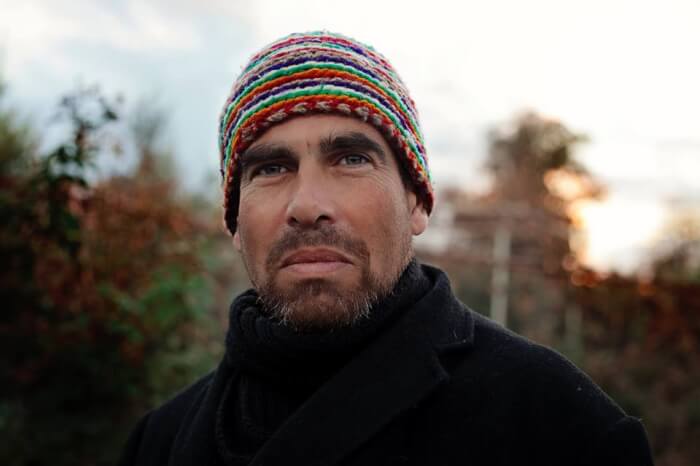
A conversation with Robin Yassin-Kassab, Co-Author of Burning Country; Syrians in Revolution and War. Dezeray Lyn sits down with writer Robin Yassin-Kassab for a Q&A on the book Burning Country, Syrians in War and Revolution that he co-authored with Syrian anarchist Leila al-Shami.
By Dezeray Lyn

Journalist Zouhir Al Shimale recently unpacked the details of a time spent waiting in the crumbled palms of East Aleppo while strapped to the grinding throes of a mass evacuation as Assad forces took back control of the enclave from rebel factions. The moving parts of this frigid and snowy scene involved sudden and stunning false alarm cries of regime offensives- a regime seemingly teetering ominously on a low hanging cliff above war-weary Syrians.
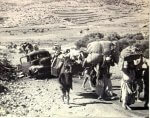
They involved freezing children, crying mothers, spiking heart rates and the same dearth of uncertainty that has been a six-year civil war churning against the backdrop of mountain range broken buildings, giant fallen fists of concrete; witnesses to the violent deaths of hundreds of thousands, and the mass displacement of many millions more.
In a coliseum of competing tragedies, inflammatory western narratives vie to be the definitive, heads arching and stretching over and above what was a gorgeously rich Syrian grassroots movement mobilizing in community councils with the means of self-organization inching towards the ends of liberation from an oppressive Assad regime.
Those who dared to breathe revolution, thundering into electrically charged Damascus streets as the Arab Spring gripped their portion of the world leaving dictators breathless and fallen, now fought two brands of white ash drizzling from the sky; those from the bombs and, running a tight parallel, a propaganda narrative stamping conspiracy, extreme right rhetoric and Assad apologism over their bleeding lips.
In the highly complicated situation unfolding on the ground in Syria, the absolute certainty is that the hands of Syrian civilians, pro-democracy protesters and revolutionaries alike, reaching through the choking fog of war, should have been gripped in solidarity by people of conscience in the west.
Rather, they have largely been met with those bending the arc of their humanity towards a dangerously remiss state-based analysis that has been an indignant and intentional drowning of the narrative that matters the most, that of the people; those who have the most nuanced critique of life in Syria, those who, at grave risk to their own lives, have taken to the streets and social media alike to pull back the curtain on the sights and sounds of a state under siege.
From the war gouged streets of Homs to the Idlib province where the newly bussed in thousands fleeing in terror from a terror regime grip their loved ones in wailing, with the concussive traumas of a bombed earth convulsing beneath them pressed heavily into their psyche, they are not contestants in competing geopolitical anecdotes up for righteous judgement by those who haven’t breathed burning ground while rushing through flaming embers, eyes screaming against the possible oncoming vision of your children split open and dying. They are, to this point, survivors of a brutal counter revolution and we owe(d) them our outstretched arms.
In a recent Q&A with Syrian-British writer Robin Yassin–Kassab, co-author with Leila al-Shami of Burning Country, Syrians in Revolution and War, a book widely regarded as one of the best English language accounts of the Syrian revolution, we delved into the failure of the western left in leaving an aching chasm in a space that should have been occupied by solidarity and the amplification of the voices on the ground.
DL: What prompted you to write Burning Country, Syrians in Revolution and War?
RYK: My co-author Leila al-Shami and I felt that the story of the Syrian revolution and counter-revolutions was being told very badly in the West. Commentators of both left and right were ignoring Syrian voices from the ground in favour of inaccurate and often orientalist grand narratives. They saw the struggle as one between a secular regime and jihadists – although the regime was the main generator of sectarianism in Syria, and the jihadists were of marginal importance until the latter half of 2013. (When they did become important, it was largely as a result of sectarian policies pursued by Assad and his Iranian backers.) Or they saw it only as a proxy war. Certainly by now there are several proxy wars being fought in Syria, but the uprising was Syrian, and came in response to Syrian conditions.
Big name journalists who spoke no Arabic and went nowhere in Syria without a regime minder were telling a story we couldn’t recognise. We wanted to amplify the voices of the revolutionaries – community activists, intellectuals, fighters, refugees – who were at the heart of events, who were doing remarkable things in the most difficult of circumstances, and who were being ignored. Our book is built around interviews with such people. It also aims to give social, historical, political and cultural context to the story – something which journalistic accounts almost inevitably fail to do.
DL: Burning Country reads like justice being done for the Syrian revolutionaries, anarchists and organizers in telling their story, while simultaneously intimating what life as a dissident under the Assad regime looked, felt and sounded like. It is also, in my opinion, a well-deserved critique of the western left who have, rather than showing solidarity and amplifying the Syrian people’s struggle, left a chasm full of conspiracy theories and extreme right rhetoric in its stead. Is this an apt analysis and can you lament on this ongoing tragedy of abandonment of Syrian revolutionaries?
RYK: Leftist commentators insisted on seeing the popular uprising as a Western regime change plot, despite all the evidence, and so they robbed millions of revolutionary Syrians of their agency. They made a bad analysis of the situation, a state-based analysis which imagined that Russian and Iranian imperialism could positively balance American imperialism. I always thought leftism was about supporting oppressed classes in their struggles against oppressor classes, not about supporting one set of expansionist, aggressive and authoritarian states against another in an imagined chess game. But it seems I was wrong. Leftists have also been confused, to say the least, by the fact that this was happening in an Arab, Muslim country. Too many leftists quickly began repeating the ‘war on terror’ tropes of the right – that all these rebels were al-Qaida, that the Muslims need a strong man to rein in their dangerous culture, and so on. It’s not surprising that the right got away with claiming that every Syrian refugee was a potential terrorist when much of the left had spent the previous years explaining that the democratic uprising for social justice in Syria was really a matter of the US whipping up the jihadist masses against a glorious resistance regime.
The prevalence of conspiracy theories, the willingness to believe Russian propaganda, and so on – we are seeing this phenomenon equally on the left and the right. This brings together many people who voted for Trump and many who would vote for Jeremy Corbyn in Britain. (As the revolutionary thinker Yassin al-Haj Saleh said, “I’ve failed to discern who is right and who is left in the West from a leftist Syrian point of view.”) It signals a profound cultural and political rot. The blatant lies told by Bush, Blair, and their loyal media in the run-up to the occupation of Iraq is one root of the problem. People drew the correct conclusion: that they couldn’t trust what their leaders told them. This scepticism is good in itself, but if it isn’t accompanied by developed analytical tools, and access to real information, then it leads people into a grey zone where nothing can really be known and absolutely anything can be believed.
Hannah Arendt wrote, “The ideal subject of totalitarianism is not the convinced Nazi or the dedicated Communist but the person for whom the distinctions between fact and fiction, and true and false, no longer exist.” This is more relevant than it ever has been.
DL: With the way cleared for pro Assad forces in taking back control of the region, [post Russian backed regime forces reclaiming Aleppo] how does the propaganda narrative play out moving forward and do you feel that Syria’s rebel factions have any hope for another revolutionary uprising against Assad and the Syrian Arab Army moving forward?
RYK: Russia’s savage bombing has been a game changer. With Russian planes and Iranian-backed ground troops, Assad has largely succeeded in driving the revolution out of the cities. The urban areas were the strongholds of democratic organisation, so in a real way the revolution is being destroyed. If the revolutionaries can’t hold territory, they can’t organise local councils, independent trades unions, women’s centres, free newspapers, and so on. Once there were almost 800 local councils. Now there are less than 400. These were the achievements of the revolution, and they are being lost.
The revolution is still strong in Idlib province, but the fighting men there tend to be dominated by Salafist or jihadist factions like Ahrar al-Sham and Jabhat al-Nusra whose politics contradict the revolution’s democratic aims. Local councils and Free Army brigades control large areas of southern Syria, but they have been militarily neutralised by the refusal of Jordan and the US to allow a weapons supply through the Jordanian border. Northern Aleppo province is also held by Free Army groups and local councils, but in the presence of the Turkish army, and in the context of territorial conflict with both ISIS and the PYD.
None of this means the war is over. Millions of Syrians fear returning to the country while Assad remains in power. Millions more are too traumatised or have lost too much to stop fighting. Syrian nationalists are outraged by the foreign occupation. Sunnis are outraged by the occupation of Shia militias. The war will continue, but may well shift towards guerrilla and terrorist tactics. Jihadist factions are likely to become stronger as the democratic option is destroyed.
Having said that, the streets of liberated Syria are still full of people protesting against Assad, Nusra, ISIS, Iran and Russia, and for freedom, dignity and social justice. Syrian revolutionaries keep surprising me, against the odds. I don’t see how now, but perhaps their persistence will win out in the end.
DL: Is there any legitimacy to the contention that leftists are allowing Assad/Hezbollah’s exploitation of their backing of Palestinian resistance factions and anti US imperialism to allow them to look the other way as Syrian infants, women, children, elderly, et al are mass murdered (and mass displaced across the globe where they face further violence, discrimination and isolation?)
RYK: Yes, the contention is correct. But again these leftists have applied faulty analysis, one not based on facts. Hafez al-Assad sided with the pro-Zionist Maronites in Lebanon in 1976, preventing a victory by leftist and Palestinian forces and ensuring the long continuation of the war. He killed tens of thousands of Palestinians at Tel Zaatar and other camps in Lebanon in his attempt to neutralise and control the Palestinian movement in the 1980s. Despite all the confrontational rhetoric, the Assads kept the border with the occupied Golan Heights secure for Israel. During the revolution, Bashaar al-Assad’s regime has tortured hundreds of Syrian-Palestinians to death, and is in large part responsible for the destruction, starvation, depopulation, and occupation by ISIS, of Yarmouk camp, the largest Palestinian community in Syria. Bashaar’s regime also tortured Maher Arar and other ‘rendered’ suspects for the Bush administration.
Hizbullah certainly did fight Israel in the past, and it was wildly popular amongst Syrians at the time. Now it is roundly despised by most Syrians and Arabs, and by some Lebanese Shia too, for its counter-revolutionary, sectarian and murderous role in Syria on behalf of its sponsor and guide, the Iranian state.
Even if Assad and Iran were primarily interested in liberating Palestine, this would not justify their slaughter of the Syrian people. And they are not interested in liberating Palestine. They use Palestine as propaganda and leverage to serve the consolidation and expansion of their own power. This much is obvious when the facts are considered.
DL: American society can, and is encouraged to be, culturally tone deaf. Our exposure to life on the ground in other regions, particularly those fire branded into our consciousness as ‘enemy’ cultures, are a sad rarity. That said, I enjoy your work in The Guardian and in an article from September of this year, you reviewed No Knives in the Kitchens of this City by Khaled Khalifa, noting that the novel “recalls Aleppo’s cinemas and haute cuisine, music recitals and bar culture, prostitutes and shrines.” Lamenting further that it stands as an “elevated form of gossip.”
I think it cheats every revolutionary, pro-democracy organizer and all lovers of the land to discuss Syria solely in post counter-revolutionary, post-civil war contexts. Can you intimate us with life in Syria before the Arab Spring uprising in terms of organizing, living, arts, love and culture under an oppressive Assad dictatorship?
RYK: Syria was in many ways a lovely country. Foreigners who visited generally loved it, and Syrians were very proud of it. Syria has a fine climate, one of the world’s great cuisines, unparalleled historical riches, and a diverse and friendly population.
It was also, beneath the surface, a tragic country, one which had suffered enforced poverty and dislocation under first Ottoman and then French imperialism, then bitter class oppression, and then sixty years of dictatorship in which a new ruling class of security officers and loyal businessmen coalesced. All forms of government exploited sectarian, ethnic, regional and tribal differences amongst the people, the better to control them. The Baathist dictatorship in particular ruled by violence and fear. About 30,000 people were killed in Hama in 1982, and thousands of dissidents disappeared in the regime’s torture prisons. Civil society was crushed.
Despite the extreme repression, Syrians produced some remarkable poetry, music, drama and films. And dissident thought continued to surface, particularly in the brief and abruptly aborted ‘Damascus Spring’ in 2000, after Bashaar al-Assad inherited the dictatorship from his father Hafez.
Bashaar shut down the political and social opening. Instead, he ‘opened’ the economy. In effect this meant a set of neo-liberal and crony capitalist reforms which enormously enriched his own family and friends while impoverishing large swathes of the population. This was the context for the 2011 uprising.
DL: What lessons can we learn from the Syrian insurrectionary uprisings, anarchist social theory community organizing, political dissidents and pro-democracy individuals and entities and their struggle seeing as we are walking into a frightening xenophobic, Islamophobic, anti-Muslim, anti-Immigrant, anti-Women, racist, misogynist, anti-LGBT, climate change denying, tonally fascist administration who has made it clear, among other atrocities, that it fully intends on the total occlusion of safe passage to these shores for Syrian refugees and others from “terror-prone” states?
RYK: I think real engagement with actual struggle tends to wake people up from their abstract theories. I hope in the coming difficult time there will be reflection on how and why the Syrian revolution was misunderstood in the West. The lessons people draw there may well help them to meet the challenges of the new period.
Walter Benjamin said, “Behind every fascism is a failed revolution.” We live in a truly globalised world, whether we like it or not. Counter-revolution in Syria – via terrorism and a refugee wave – is feeding into a dangerous rise of nativist and exclusionary politics both east and west. The victory of propaganda and false assumptions in the Syria narrative war feeds into the victory of propaganda and false assumptions in such debates as Brexit and Trump versus Clinton.
Our fates are linked. Understanding leads to general understanding. Ignorance produces more countervailing ignorances. A defeat in one place produces defeat in another. This also means that a victory in one place makes victory more likely elsewhere.


Click here to subscribe FREE to Ray Hanania's Columns

His award winning columns can be found at www.HANANIA.COM Subscribe FREE today
Hanania also writes about Middle East issues for the Arab News, and The Arab Daily News criticizing government policies in the Israeli-Palestinian conflict.
Hanania was named "Best Ethnic American Columnist" by the New America Media in November 2007, and is the 2009 recipient of the SPJ National Sigma Delta Chi Award for column writing.
Email Ray Hanania at [email protected].
Follow RayHanania at Twitter
- Israelisnipers shooting and killing hospital workers in Gaza - December 11, 2023
- CAIR Condemns Israeli Executions of Wounded, Unarmed Palestinian in West Bank - December 11, 2023
- Arab and Muslim American voters face a “simple choice” between Biden’s inhumanity and Trump’s edgy politics - December 9, 2023