


Challenges facing the development of professional Arab American Journalism
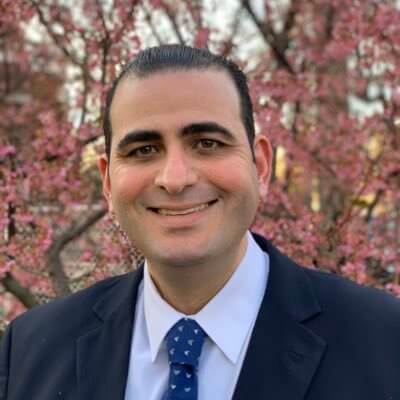
By Ray Hanania
August 12, 2002. From the National Arab American journalism Association Archives
Journalism is a profession, not an instrument of politics. Yet, professional journalism can influence politics and events by insuring that an accurate version of events are presented to the public. The imprimatur of professional journalism gives the process a unique credibility that is unparalleled and that conveys a sense of trust that is embraced by the public.
It is therefore important that Arab American journalism evolve as an effort to achieve professionalism, rather than as an instrument of political opportunity. In the short run, politicians who apply journalistic techniques without proper training do achieve a sense of greater fairness. But in the long run, the community suffers greatly and the truth of an argument can become distorted in the political manipulation of the process.
Therefore, it is important that Arab Americans pursue journalism as a career choice rather than as an option in a political battle.
It is important to understand the purpose of journalism: That purpose is to present information that is free of advocacy, fair and objective, and comprehensive in its coverage to a targeted audience. Understanding that there are different audiences helps to understand why professional journalism reaches the widest possible audiences, while unprofessional or non-journalistic communications reaches the most limited audiences.

Journalism is not just about expressing an opinion. It is much larger. It includes the ability to report news as objectively as possible, recognizing the shortcomings of reporters and humans to write about “what you know or discover.” It includes the ability to write compelling feature articles that provide a broad perspective to the bigger picture, and that helps present the human side of issues. It includes commentary, the one area where most anti-Arab bias exists in the media.
It is interesting that the American media is biased for two reasons: First, the American media often presents a limited variety of viewpoints on their op-ed and commentary pages. Absent are suppressed on these pages are views written by Arab American journalists — in part because Arab American journalists are a rarity, and because the American media does not seek these views out to be included.
Second, the American media rarely uses the feature side of journalism to explore Arab issues. The American media doe snot often present the events involving Arabs in a human perspective. The depth of understanding is restricted to statistics and political rhetoric.
Third, Arab Americans do not pursue professional journalism as a real career choice, or cannot find jobs in journalism that provide adequate wages to survive. They are forced to take other employment in non-journalism fields — as a result, we have many professional journalists who work as activists for Arab organizations, or hold down jobs in many other professions that range from real estate, banking, law, medicine and even engineering. (The wage paying career often tends to influence how the journalists evolves, pulling them away from professional journalism and more toward political writing and dissertation.)
Finally, with all of these first two factors missing or suppressed, American journalists find themselves ignoring the mainstream Arab community in their stories because this community appears to lack credibility. They have no real ethnic press. Their media is dominated by non-journalist professionals and self-serving business interests, and the community tends to be combatative as a result of existing in a hostile, anti-Arab environment that does not treat the community fairly.
You can see how the situation feeds the problem and imprisons the Arab American community while serving to limit the American media’s coverage of our community.
Journalism must be understand in the context of audiences. Who is it that you are speaking to? Who you are speaking to determines who should be speaking. It is a principle that is not understand in the Arab World and in the way Arab Americans and Arab groups approach communications.
VOICES & AUDIENCES
There are three types of Arab individuals championing accuracy in the Middle East. They are:
Arab American activists: This group writes eloquently and with reasoned political arguments in English. The articles are complex dissertations that often remain unread by the American public. They work independently or within their political circles. This group includes business people, community organization leaders, and activists for causes who sometimes produce publications that appear to be products of journalism but are instead non-journalistic products of advocacy. (The vast majority of Arab American magazines, newspapers, radio and TV shows are actually created and managed by this group of non-journalists, undermining the credibility of professional journalism in the Arab American community.)
Arab American Academics: This group writes from the need to be published as academics. Their dissertations are extensively complicated and read only by the smallest circle of individuals interested in Middle East issues. They dominate the debate because the non-Arab media tends to view them as more credible than the Arab journalists or the activists groups. Yet, their arguments are so complex, lack the creative edge that makes journalism the most effective form of communications possible, and tend to be argumentative. Their views are also often presented to the public in the context of debates, rather than as objective journalistic analysis.
Arab American journalists: This group writes from the stand-point of professional journalism by are subjected to intense pressures that box them into focused debates that tend to undermine their credibility. They lack a network of professional journalism support and are often forced to find non-journalism related jobs in order to earn incomes as the Arab American journalism profession does not generate adequate wages.
You can also analyze the three groups based not only on who they are but on their natural audiences. The activists and academics speak to the narrowest audiences, while the only group that has the ability to speak to the largest audience (the general public) are the professional journalists.
The Activists speak to the choir, their circle of supporters and members who already believe and accept their views. The American media views them with skepticism, often pairing them with spokesmen offering the alternative viewpoint to the public. (Ironically, the activists view this as a victory when in fact the very act of always being paired is a subtle signal to the reader that the two views should be taken with a grain of salt.)
The Academics speak to the academic community, and a level of published dissertation that is read almost exclusively by the academic world and yet ignored by the vast majority of average Americans. These journals (such as the Journal of Palestine Studies and others fail to achieve the goal of informing the public and tend to only serve to reinforce the existing views of the choir.)
Both the activist and the academic strive to be published on the op-Ed pages of major American newspapers, and they do succeed to a limited degree … limited in comparison of what could be achieved if the same columns were authored and submitted by Arab American journalists.
It is the Arab American journalists who have the best chance of speaking to the widest possible audience. The more professional the journalist, the wider the audience becomes. More Americans will listen to this group than to the activists or the academics. It is the Arab American journalist who will more than likely be published in the mainstream American news media, more often than the activist and academics.
Ironically, the Journalists will also be able to more effectively deliver the messages, conclusions and the findings of the activists and the academics than the activists or academics could ever hope to deliver on their own.
CHALLENGES
The biggest challenge we face is the fact that the Arab community comes from a society where, historically, journalism does not exist. Despite some recent (past 20 years) exceptions, free speech is prohibited in the Middle East. Inexperienced in this fundamental essential to the profession and craft of journalism, Arabs who come from this scenario are burdened by restrictions and distortions in what journalism really is.
They do their best. They are prohibited from criticizing their own governments and political processes, so the journalists focus on those issues and views that are sanctioned by their governments. (Many examples exist in the Arab World, too, including Aug. 10, 2002, Jordan closing the al-Jazeera Offices in Amman.)
That experience becomes ingrained and is repeated in the evolution and growth of Arab American “journalists” whose publications and media tend to reflect the restrictions imposed in their homelands by the governments in power. This result in publications that are not journalistic in quality, but that instead advocate points of views.
Instead of assisting to improve the situation, Arab American organizations encourage the problem.
Arab conferences such as those hosted by the civil rights advocacy group the American Arab Anti-Discrimination Committee, ADC, for example, showcase individuals as journalists who in fact are not journalists at all. Panel discussions on communications focus not on encouraging grassroots professional journalism in the Arab community, even though they recognize the failings of the professional American media, but rather on reinforcing their organization’s political agenda.
Arab American journalists are victims of a environment where issues advocates and academics who are not journalists are recognized as journalists by these Arab organizations. Those who are journalists are excluded because these same journalists often criticize the global issues. Arab organizations seem to define Arab journalists not on the basis of professional education (as they apply to almost every other profession) but on the basis of a criteria that demands an affirmative response to each of the following four premises:
Do they support political and social agendas embraced by the organization?
Are they members of the organization’s circle of activism?
Are they pro-Palestinian academics?
Do they adhere to a policy of only criticizing Israel and ignoring the problems of the Arab community?
SOLUTION
Arab Americans need to work toward professional journalism, recognizing the existing situation is not one of choice.
That is, those who work in non-journalism related fields to allow them to pursue journalism should continue to strive toward professional journalism.
This means networking with others who seek to produce professional journalism products. This means working in an atmosphere of understanding professional journalism and encouraging our youth to pursue journalism careers for the sake of becoming journalists.
We should not try to become journalists because we want to change the way the world views the Palestine-Israel conflict. Instead, we should pursue journalism because we recognize that professional journalism as a career choice will lead the writer to the truth. And that we should be confident that the process of identifying the truth is the answer to the unfairness of the coverage of the Palestine-Israel conflict. In other words, the higher principle of achieving professional journalism is more important than pursuing the “truth” of the Palestine-Israel conflict.
If we achieve the higher principle of professional journalism, then the truth of the conflict will be self-evident.
The individuals who write should also recognize that supporting journalism as an instrument of professional communications will help them achieve their goals. That is, the academics certainly have a role to play in serving as the foundation and source for accurate information. But, instead of being the deliverers of the information, they should be the sources who are delivered by a professional journalism mechanism to the public.
It is a fact that a person who attempts to advocate an issue loses a significant amount of credibility in the eyes of the general public. But, the same argument takes on a greater sense of truth when it is delivered not by the advocate but by an individual trusted to seek out the truth of an issue. That person is a professional journalist.
This is so important.
The cause of Palestine is handicapped not by an anti-Arab American media — which does exist and slows down the process of accurately informing the public. It is handicapped by the absence of a group of individuals who are professional journalists who seek to achieve a level of professional accuracy in Middle East coverage.
CONCLUSION
Recognizing the limitations of those who lack professional journalism experience is not a criticism of their efforts. Individuals in Palestine, for example, who struggle to present the truth, are victims of a process they do not understand and they therefore fail to address.
They try to become not only the news but the deliverer of the news. They tend to want to both express their opinions and deliver the opinions.
The person who delivers the information must be viewed as objective instruments of the process of communications, rather than as advocates of the views.
Arab Americans who strive to professional journalism are handicapped by the restrictions imposed on them. The greatest hindrance to their struggle is the absence of jobs that pay wages that permit them to survive on professional journalism alone. There are very few journalism career options for them where they can work as journalists exclusively.
In those few instances where Arabs are hired by American media, the media often imposes restrictions on them that on principle are correct but that are not applied to Jewish journalists, for example. Arab Journalists are often restricted from covering Arab or Middle East issues while Jewish journalists often have a greater freedom not only to cover the Middle East but to apply their personal experiences to their reporting.
Finally, because the Arab academics and activists lack a real understanding of professional journalism (or view professional journalism in the context of the often unprofessional journalism we see in the American media), they do not recognize the importance of the process of professional journalism. They often strive do both, rather than to allow the Arab journalists to do their jobs.
The higher principle is the most important goal, not advocacy per se. That is, if you believe a cause is just, finding the truth will either prove you wrong or prove you right.
Those who are afraid to be proven wrong are the unprofessional journalists and who contribute to this problem.


Click here to subscribe FREE to Ray Hanania's Columns

His award winning columns can be found at www.HANANIA.COM Subscribe FREE today
Hanania also writes about Middle East issues for the Arab News, and The Arab Daily News criticizing government policies in the Israeli-Palestinian conflict.
Hanania was named "Best Ethnic American Columnist" by the New America Media in November 2007, and is the 2009 recipient of the SPJ National Sigma Delta Chi Award for column writing.
Email Ray Hanania at [email protected].
Follow RayHanania at Twitter
- Israelisnipers shooting and killing hospital workers in Gaza - December 11, 2023
- CAIR Condemns Israeli Executions of Wounded, Unarmed Palestinian in West Bank - December 11, 2023
- Arab and Muslim American voters face a “simple choice” between Biden’s inhumanity and Trump’s edgy politics - December 9, 2023